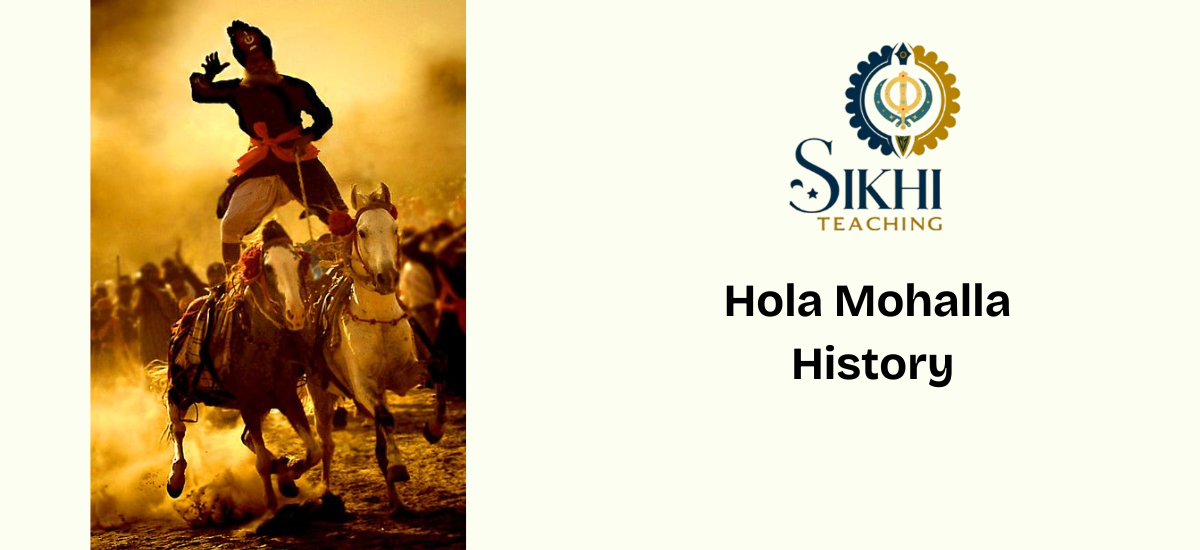
Hola Mohalla is one of the most important Sikh festivals celebrated every year at Anandpur Sahib in Punjab, India. It brings together thousands of Sikh devotees from across the world for three days of prayer, martial arts displays (Gatka), Kirtan, and community service. The festival was founded by Guru Gobind Singh Ji, the tenth Sikh Guru, in the year 1701. It takes place on the day after Holi, usually in the month of Phalguna or Chaitra according to the Sikh Nanakshahi calendar.
In this guide, you will find everything you need to know about the history of Hola Mohalla, its meaning, how it is celebrated, the 2026 dates, and why it holds such deep spiritual and cultural importance in Sikhism
What is Hola Mohalla ?
Hola Mohalla is a Sikh festival that combines martial spirit with spiritual devotion. The name itself carries deep meaning. According to Bhai Kahan Singh Nabha, the author of the famous Sikh encyclopedia Mahan Kosh, the word “Hola” comes from the word “Halla,” which means a military charge or attack. The word “Mohalla” refers to an organised procession or a military column that moves in a disciplined manner.
Together, “Hola Mohalla” means “the charge of a military procession.” Unlike Holi, which is a Hindu festival of colours and spring, Hola Mohalla was designed by Guru Gobind Singh Ji to train Sikhs in combat, build warrior discipline, and strengthen the community bond. It is a day when Sikhs demonstrate that they are not just spiritually devoted but also physically brave and ready to protect the weak.
The word “Hola” is also described as the masculine form of “Holi,” which shows that Guru Gobind Singh Ji, 10th Sikh Guru intentionally created a more active and powerful version of the festival , one focused on strength, unity, and readiness.
Hola Mohalla 2026 Date, Venue & Key Timings
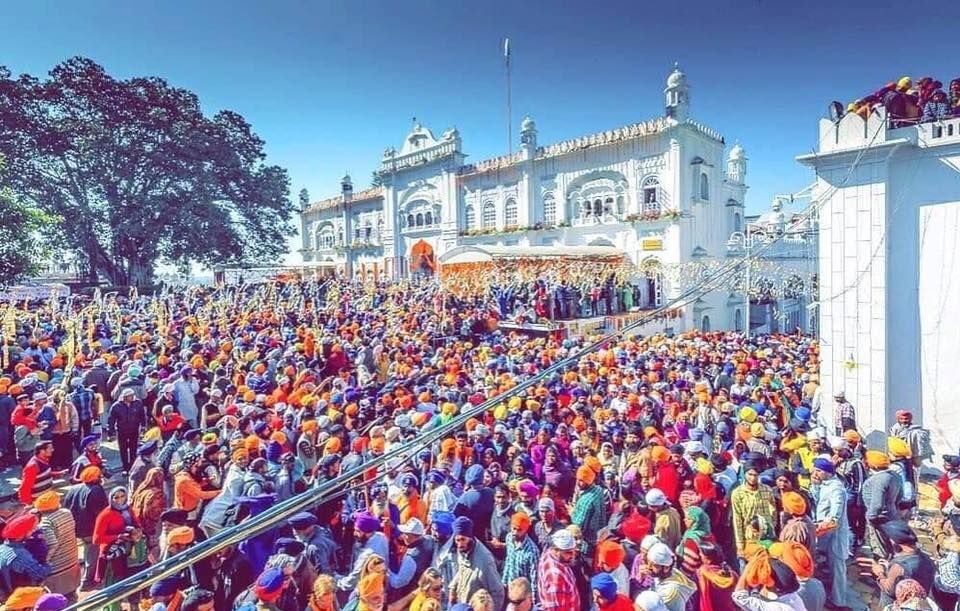
Hola Mohalla 2026 will be celebrated from March 4 to March 6 at Anandpur Sahib, Rupnagar District, Punjab, India. The main event falls on March 5, 2026, which is the Chet Vadi 1 date on the Nanakshahi Sikh calendar. Below is a quick reference table for Hola Mohalla 2026:
Detail | Information |
Festival Name | Hola Mohalla |
Hola Mohalla 2026 Date | March 4 to March 6, 2026 |
Main Day | March 5, 2026 (Chet Vadi 1, Nanakshahi) |
Venue | Anandpur Sahib, Rupnagar District, Punjab, India |
Duration | 3 Days |
Main Gurudwara | Takht Sri Keshgarh Sahib |
Key Activity | Nagar Kirtan, Gatka, Langar, Amrit Sanchar |
Organised By | Shiromani Gurdwara Parbandhak Committee (SGPC) |
The celebrations begin at dawn on March 4 with the recitation of Gurbani and Amrit Vela prayers. The grand Nagar Kirtan procession takes place on March 5, followed by Gatka displays and the traditional Langar. On March 6, the festival concludes with the Bhog ceremony of the Guru Granth Sahib.
History of Hola Mohalla: Origins Founded by Guru Gobind Singh Ji in 1701
The history of Hola Mohalla begins on 22nd February 1701. On this day, known as Chet Vadi 1 in the year 1757 of the Bikrami calendar, Guru Gobind Singh Ji held the very first Hola Mohalla at Anandpur Sahib. The event was conducted on the sandy banks of the River Charan Ganga, with the Holgarh Fort standing nearby and the sacred temple of Mata Naina Devi visible in the background of the Shivalik Hills.
Guru Gobind Singh Ji had founded the Khalsa Panth just two years earlier in 1699. After this historic event, the need to train Sikhs in military skills became very important. Hola Mohalla was designed to be an annual gathering where Sikhs would come together not just for prayer, but also to practice warfare, sharpen their combat skills, and learn how to defend themselves and others.
The festival was set on the day following Holi, giving it a clear Sikh identity that was separate from Hindu celebrations. Every year since 1701, Hola Mohalla has been held at Anandpur Sahib, making it one of the longest-running annual Sikh gatherings in history.
Why Did Guru Gobind Singh Ji Start Hola Mohalla?
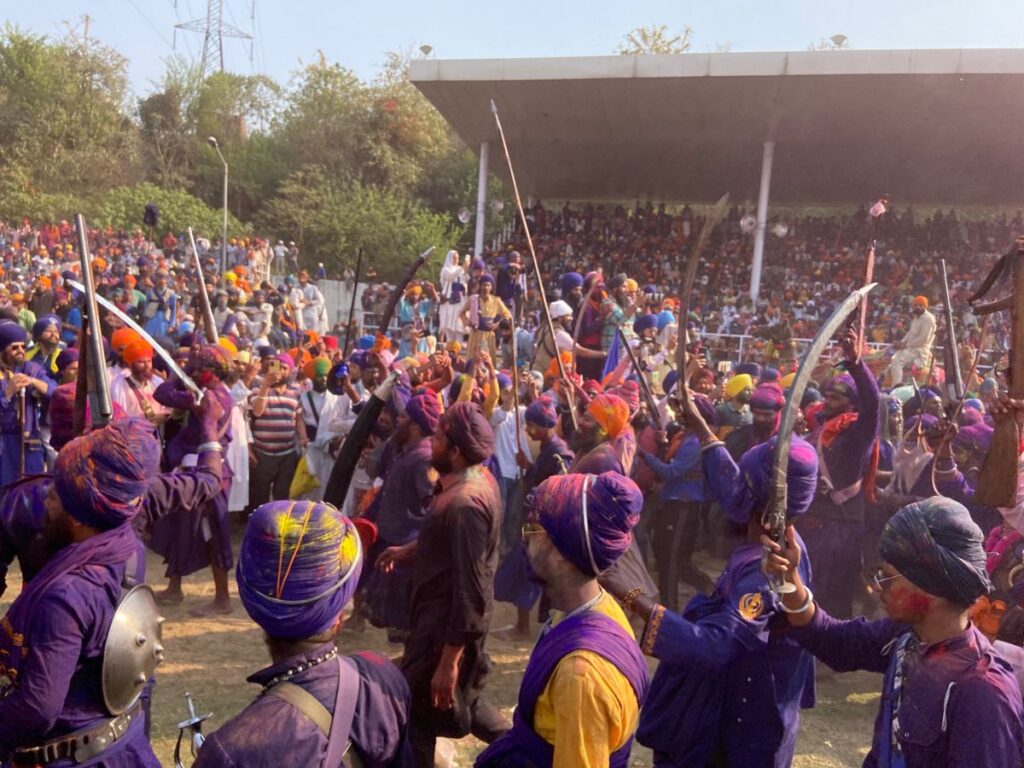
To understand why Guru Gobind Singh Ji started Hola Mohalla, we need to look at the conditions Sikhs were facing in the late 17th and early 18th century. The Mughal Empire under Emperor Aurangzeb was actively persecuting Sikhs, Hindus, and other communities that did not follow his interpretation of Islam. Religious freedom was under threat, and many communities were being forced to convert.
Guru Gobind Singh Ji created the Khalsa in 1699 to build a community of saint-soldiers — people who were spiritually grounded but also physically capable of standing up to injustice. Hola Mohalla was the next step in this vision. By organising annual military exercises, mock battles, and combat training at Anandpur Sahib, Guru Gobind Singh Ji was preparing the Sikh community to defend themselves, protect the weak, and stand for righteousness (Dharam).
While Holi was a festival of joy and colour, Guru Gobind Singh Ji saw an opportunity to give Sikhs a different kind of festivity one rooted in courage, discipline, and readiness. Hola Mohalla became the Sikh answer to an uncertain and dangerous time in Indian history.
Connection Between Hola Mohalla and Holgarh Fort
Holgarh Fort plays an important role in the early history of Hola Mohalla. The fort is located across the stream of Charan Ganga, to the northwest of Anandpur Sahib. Guru Gobind Singh Ji chose the open ground near this fort as the venue for the first Hola Mohalla celebrations and the mock battles that were organised during the festival.
This location was also historically significant because the Battle of Ninnohgarh had taken place nearby in 1700, just a year before the first Hola Mohalla. In that battle, Sikh forces had faced the combined armies of Mughal commanders and Hill Rajas. The choice of this location for Hola Mohalla was therefore a powerful symbol the same ground that had witnessed real warfare would now host training for future warriors.
Today, Holgarh Fort stands as a heritage site and an important landmark for Sikh pilgrims visiting Anandpur Sahib during the Hola Mohalla festival.
Religious & Spiritual Significance of Hola Mohalla in Sikhism
Hola Mohalla is not just a cultural event it carries deep religious and spiritual meaning for Sikhs around the world. At its core, the festival is a celebration of the Khalsa way of life as taught by Guru Gobind Singh Ji. It brings together three of the most important values in Sikhism: Seva (selfless service), Simran (remembrance of God), and Shakti (strength and courage).
The festival reminds Sikhs of their duty to be saint-soldiers. A Sikh must not only pray and meditate but also be ready to protect those who cannot protect themselves. Hola Mohalla makes this teaching visible and alive through its displays of Gatka, Nagar Kirtan, and Langar.
It is also a time for the Amrit Sanchar ceremony — the initiation of new members into the Khalsa Panth. This ceremony, introduced by Guru Gobind Singh Ji in 1699, is held during Hola Mohalla as a way to renew the commitment to Sikh values of bravery, equality, humility, and love for all humanity. Many Sikhs choose this sacred occasion to take Amrit (initiation) and formally join the Khalsa.
Hola Mohalla vs Holi: Key Differences Every Sikh Should Know
Feature | Hola Mohalla | Holi |
Religion | Sikh | Hindu |
Founded By | Guru Gobind Singh Ji (1701) | Ancient Hindu tradition |
Purpose | Martial training, community strength, spiritual devotion | Celebration of spring, victory of good over evil |
Main Activity | Gatka, Nagar Kirtan, Langar, Amrit Sanchar | Throwing coloured powder and water |
Location | Anandpur Sahib, Punjab (main) | Celebrated across India |
Duration | 3 Days | 2 Days (Holika Dahan + Dhulandi) |
Colours | Blue (Nihang Singhs’ attire) | All colours (Gulal powder) |
Food | Langar (free community meal) | Gujiya, thandai, sweets |
Spiritual Focus | Gurbani, Kirtan, Khalsa initiation | Prayers to Vishnu, Prahlad story |
While Holi is a joyful spring festival rooted in Hindu mythology, Hola Mohalla is a Sikh observance focused on warrior spirit, equality, and community service. Guru Gobind Singh Ji did not reject the spirit of joy but transformed it into something with greater purpose — a day of strength, prayer, and togetherness for the Khalsa.
Story of Prahlad & Its Connection to Hola Mohalla History
The story of the child devotee Prahlad has a special place in the spiritual context of Hola Mohalla. Prahlad was the son of the demon king Hiranyakashipu, the ruler of Multan, who demanded to be worshipped as a God. Prahlad, however, was a devoted follower of Vishnu (referred to in Sikh scripture as the eternal Lord) and refused to accept his father as God.
His aunt Holika, who had a boon of being fire-resistant, planned to burn Prahlad alive. She sat in a fire with Prahlad in her lap. But the boon worked in reverse Holika perished in the flames while Prahlad survived unharmed. This event became a symbol of the truth that devoted faith and righteousness always triumph over arrogance and evil.
The story of Prahlad was well known among early Sikhs and holds an important place in the Guru Granth Sahib Ji. Verses about Prahlad are found in the writings of Bhagat Namdev, Bhagat Kabir, and Guru Amar Das Ji — the third Sikh Guru. One such line from the Guru Granth Sahib reads:
Hola Mohalla as a Symbol of Chardikala
One of the most beautiful spiritual concepts in Sikhism is Chardikala, which means a constant state of high spirit, optimism, and courage — even in the face of difficulty. Hola Mohalla is a living expression of this principle. When Guru Gobind Singh Ji organised the first Hola Mohalla in 1701, the Sikh community was under severe pressure from the Mughal Empire and the Hill Rajas. Yet instead of retreating in fear, Guru Gobind Singh Ji called his Sikhs to gather, celebrate, and demonstrate their strength.
The Ardas (Sikh prayer) ends with the words “Nanak Naam Chardikala, Tere Bhane Sarbat Da Bhala” — meaning, “O Nanak, with the Name of God, may there always be high spirits, and in your will, may everyone prosper.” Hola Mohalla embodies this prayer completely. It is a festival that says: we are not afraid, we are united, and we serve both God and humanity with joy.
This spirit of Chardikala is what makes Hola Mohalla different from any other religious festival in the world. It is not a solemn occasion of mourning or fasting it is a joyful, powerful, and energetic celebration of life, faith, and courage.
How is Hola Mohalla Festival Celebrated? Day-by-Day Program
Hola Mohalla is celebrated over three days at Anandpur Sahib. Each day has a specific set of activities that blend prayer, martial arts, music, and community service. Here is a day-by-day overview of the Hola Mohalla festival program:
Day | Date (2026) | Key Activities |
Day 1 | March 4, 2026 | Amrit Vela prayers at Takht Keshgarh Sahib, Kirtan by Ragi Jathas, arrival of Nihang Singhs, small Gatka demonstrations |
Day 2 (Main Day) | March 5, 2026 | Grand Nagar Kirtan procession, large-scale Gatka, tent pegging, horse riding, Ardas, Amrit Sanchar ceremony, Langar for all |
Day 3 | March 6, 2026 | Bhog ceremony of Akhand Path (continuous recitation of Guru Granth Sahib), final Ardas, distribution of Karah Prasad, closing Kirtan |
Throughout all three days, the Langar halls at Anandpur Sahib remain open 24 hours, serving free vegetarian meals to all visitors regardless of their religion, caste, or background. Thousands of volunteers from Punjab and neighbouring states come to serve during this time.