Introduction to Shaheedi Week / Shaheedi Hafta
Shaheedi Week, also known as Shaheedi Hafta, is one of the most emotional and inspiring periods in Sikh history. It is observed every year in December to remember the great sacrifices (Shaheedi) made by Guru Gobind Singh Ji , Mata Gujri Ji, and the four Sahibzade (sons of Guru Gobind Singh Ji).
Shaheedi Week teaches us lessons of bravery, faith, truth, and standing against injustice, even at a very young age. During this week, Sikhs all over the world remember how a single family sacrificed everything for Dharam (righteousness) and human values.
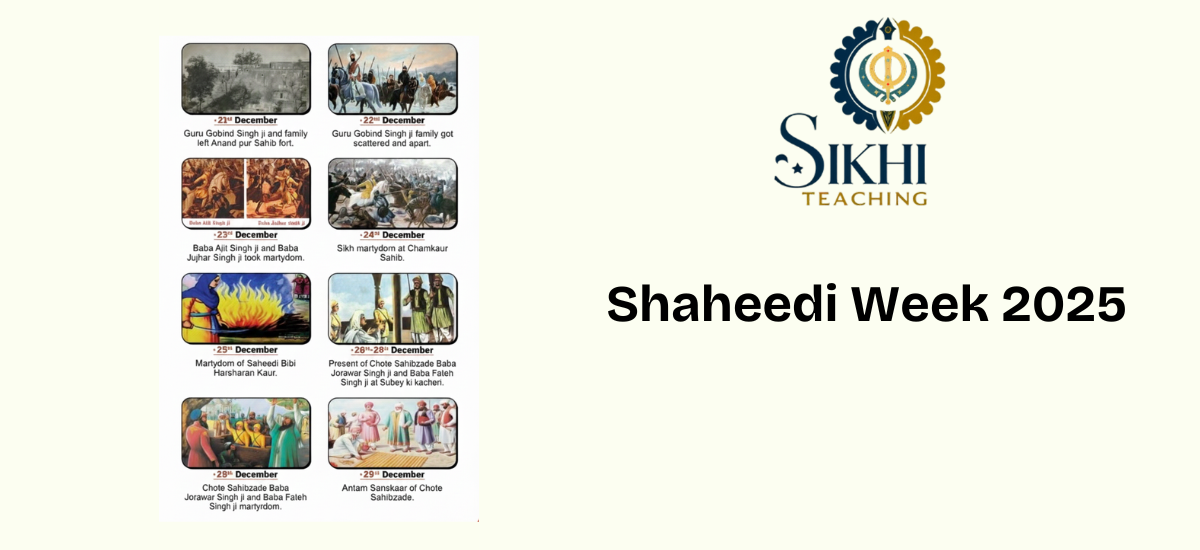
Shaheedi Week 2025 Day-Wise History (Date-Wise Information)
Day 1 – 21 December
Leaving Anandpur Sahib
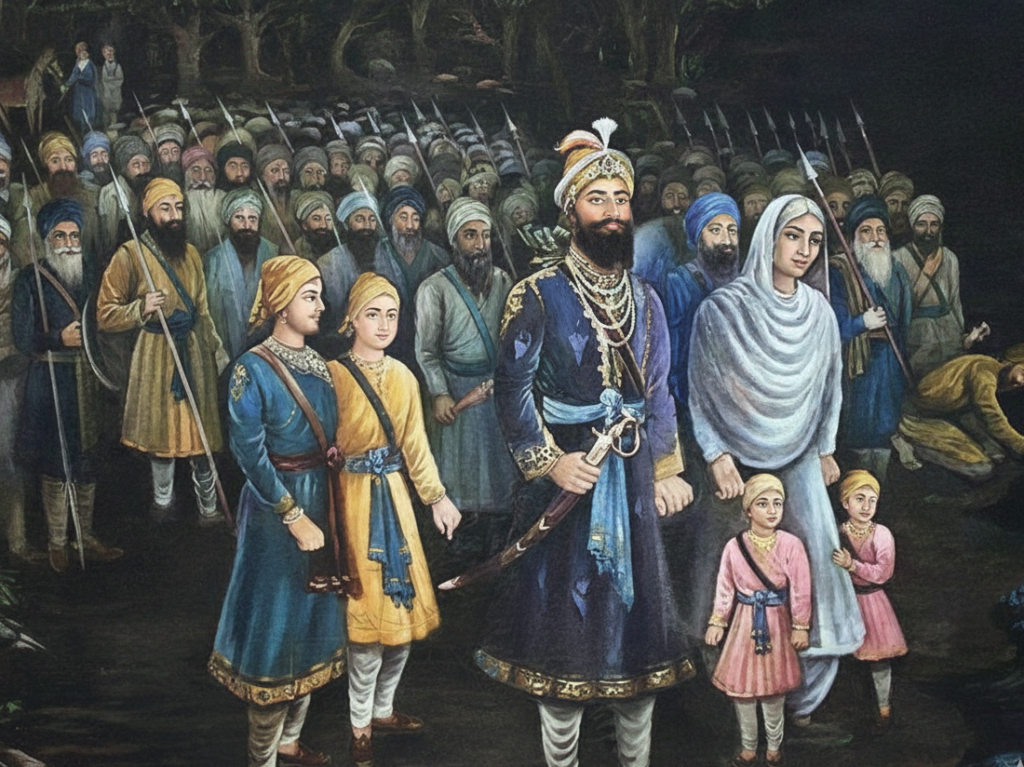
What happened:
- Guru Gobind Singh Ji and his family were surrounded at Anandpur Sahib for many months
- Mughal forces promised safe passage if the Guru left the fort
- Trusting the promise, Guru Ji left Anandpur Sahib at night
- The promise was later broken, and the Sikh convoy was attacked
Place: Anandpur Sahib (Punjab)
Importance:
- This day marks the beginning of Shaheedi Week
- It shows Guru Ji’s faith in God, not in false power
Day 2 – 22 December
Separation of the Guru Sahib Ji Family
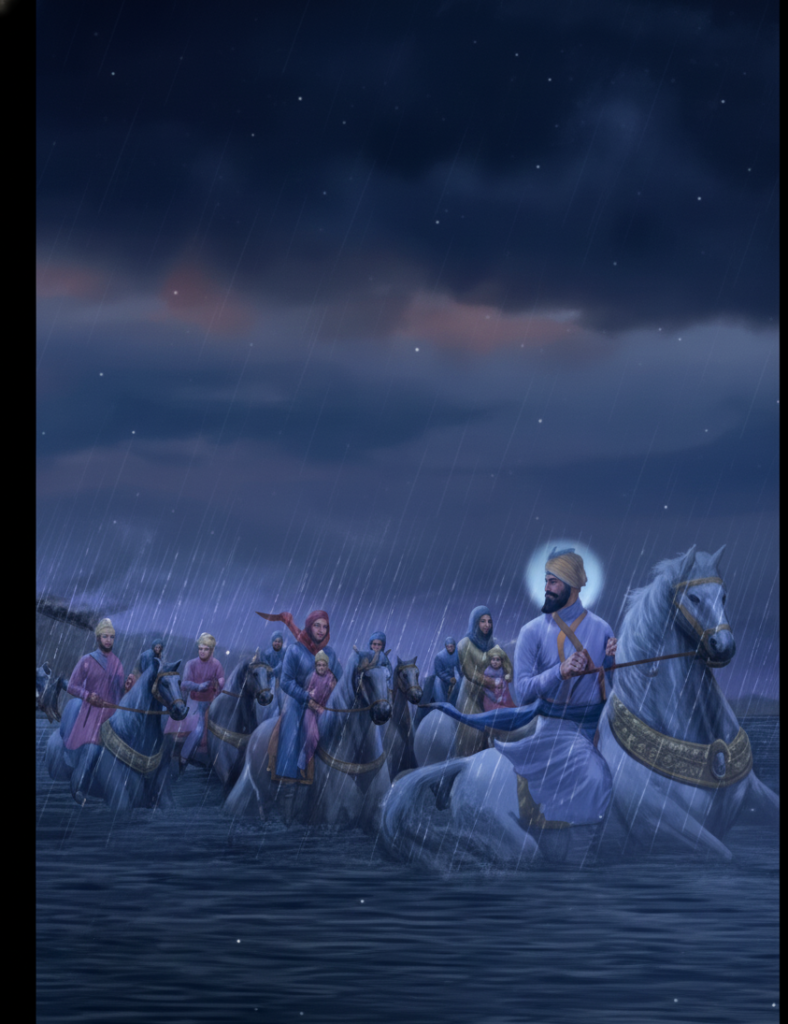
What happened:
- During the difficult journey through forests and rivers:
- Guru Gobind Singh Ji got separated from Mata Gujri Ji
- The two younger Sahibzade (Baba Jorawar Singh Ji, Baba Fateh Singh Ji)stayed with Mata Gujri Ji
- The two elder Sahibzade (Baba Ajit Singh Ji, Baba Jujhar singh ji )stayed with Guru Sahib Ji
- Heavy rain, cold weather, and enemy attacks made the situation worse
Place: Forests near Sarsa River
Importance:
- This separation led to different sacrifices in Chamkaur and Sirhind
Day 3 – 23 December
Battle of Chamkaur Begins and Shaheedi of Vadde Sahibzaade
What happened:
- Guru Gobind Singh Ji reached Chamkaur Sahib
- Only 40 Sikhs were with him
- Thousands of Mughal soldiers surrounded the small fort
- Sikhs decided to fight for Dharam (righteousness)
- Sahibzada Ajit Singh Ji (about 18 years old) asked permission to fight
- Guru Gobind Singh Ji blessed him
- Sahibzada Ajit Singh Ji fought bravely against thousands of soldiers
- He attained Shaheedi on the battlefield
- Sahibzada Jujhar Singh Ji, only 14 years old, followed his elder brother
- He fought fearlessly despite his young age
- He also attained Shaheedi in the Battle of Chamkaur
Place: Chamkaur Sahib (Punjab)
Importance:
- One of the most heroic battles in Sikh history
Day 4 – 24 December
Sikh Martydom at Chamkaur Sahib
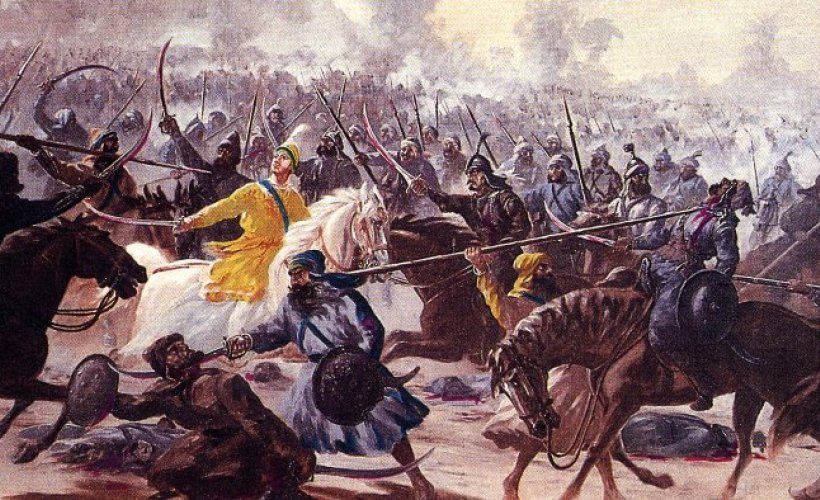
- Extreme Odds: Guru Gobind Singh Ji and 40 Sikhs defended a small mud fortress against a massive Mughal army numbering in the thousands.
- Heroic Martyrdom: The Guru’s two eldest sons, Sahibzada Ajit Singh and Sahibzada Jujhar Singh, fought valiantly and died as martyrs on the battlefield.
- The Command: Following the Panj Pyare tradition, the Sikhs “ordered” the Guru to escape the fort to ensure the future of the Khalsa.
- Ultimate Sacrifice: This battle represents the peak of Sikh sacrifice, where the Guru sacrificed his family and followers for the cause of righteousness.
Day 5 – 25 December
Martydom of Shaheedi Bibi Harsharan Kaur
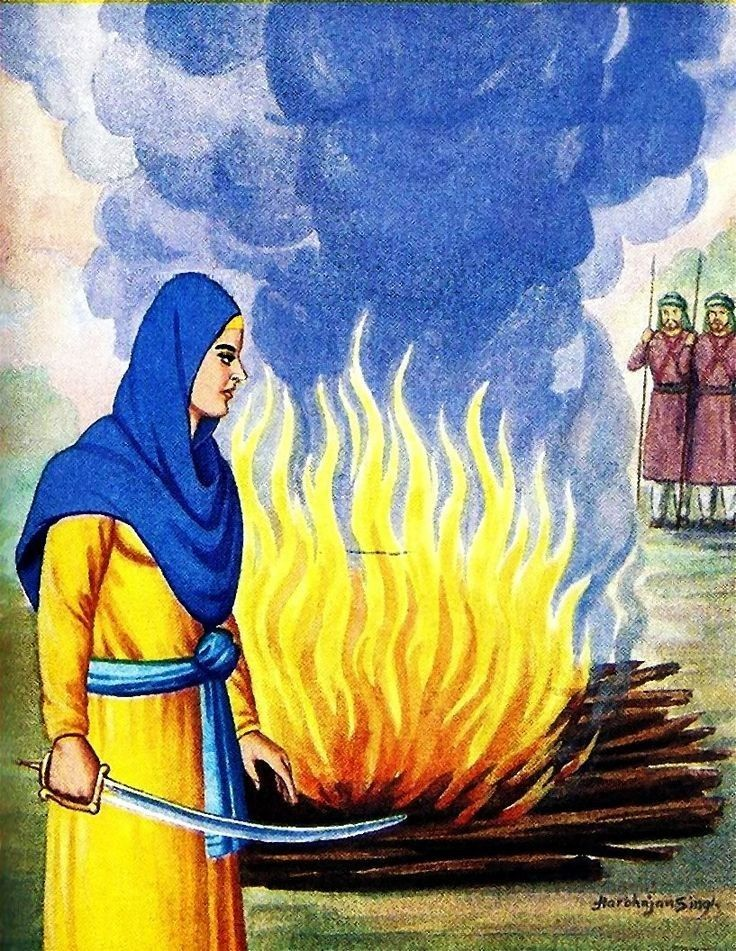
- The Mission: After the Battle of Chamkaur (1704), she took it upon herself to perform the final rites for the martyred Sikhs whose bodies lay on the battlefield.
- The Sacrifice of the Sahibzade: She specifically sought out the bodies of the two elder Sahibzade, Baba Ajit Singh Ji and Baba Jujhar Singh Ji, to ensure they received a respectful cremation.
- Identifying the Martyrs: Braving the darkness and the presence of Mughal guards, the 16-year-old Bibi recognized the Sikhs by their Kakaars (symbols of faith like the Kara and Kesh) among the thousands of fallen.
- The Funeral Pyre: She collected the bodies of 32 Sikhs, including her own husband (Bhai Pritam Singh), and lit a single funeral pyre while reciting Sohila Sahib (evening prayer).
- Ultimate Martyrdom: When the fire alerted the Mughal soldiers, she refused to flee or surrender; she was eventually captured and thrown into the same funeral pyre, attaining martyrdom alongside her brothers-in-faith.
Day 6 – 26-27 December
Chote Sahibzade at Subey di Kacheri
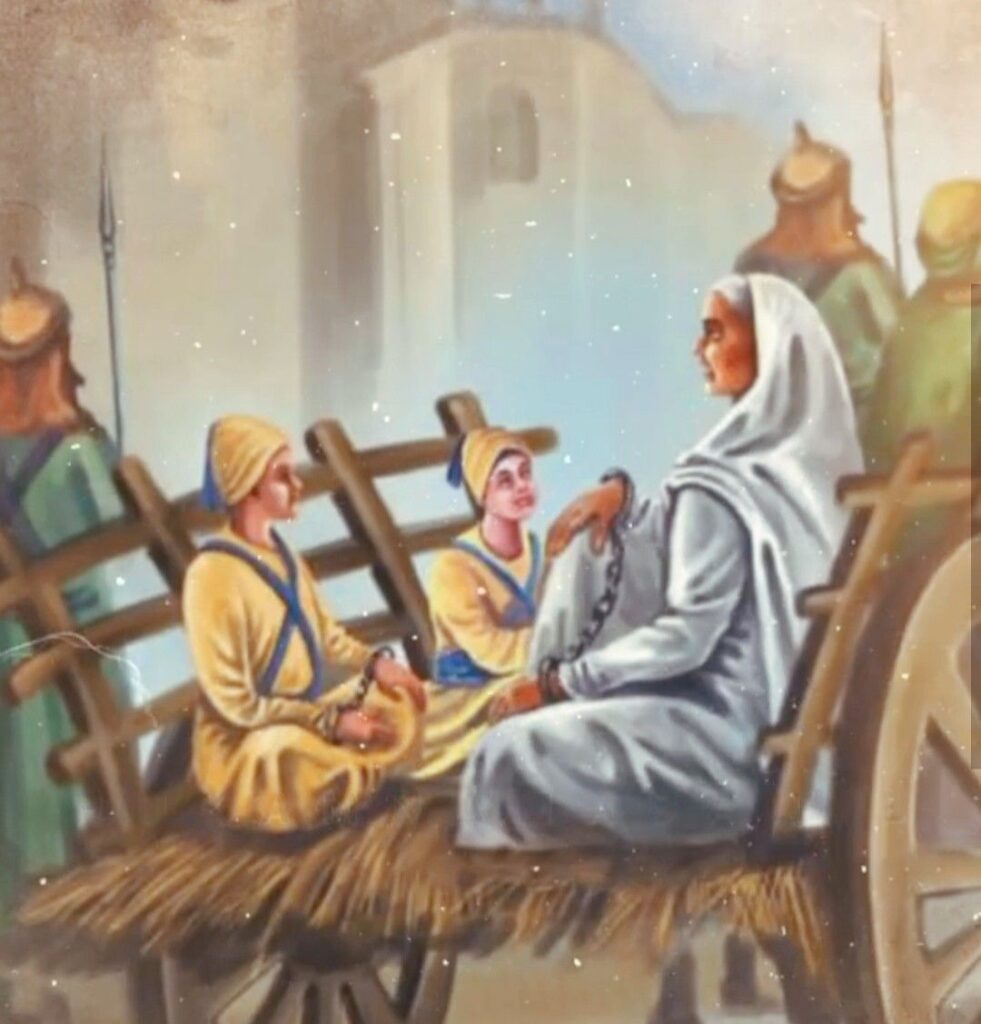
- The Special Door Trap: To force the children to bow, the Mughals made them enter through a very small door. The Sahibzade, aged 7 and 9, outsmarted them by entering feet-first, ensuring they never bowed to anyone but the Guru.
- The Bold Greeting: Upon entering the court, they didn’t offer a submissive salute but loudly shouted the Khalsa Fateh : “Waheguru Ji Ka Khalsa, Waheguru Ji Ki Fateh!”
- The Bribes and Threats: Wazir Khan offered them immense riches, beautiful wives, and high ranks if they converted to Islam. They firmly replied that their faith was more precious than any worldly kingdom.
- The Mockery of Death: When threatened with a brutal execution, the younger brother, Baba Fateh Singh, famously said that their grandfather (Guru Tegh Bahadur Ji) gave his head but not his faith, and they would do the same.
- The Sentence: After several days of refusing to convert despite being kept in the freezing Thanda Burj (Cold Tower), Wazir Khan ordered them to be bricked alive (immured) within a wall.
Day 7 – 28 December
Bricked Alive – Shaheedi of Younger Sahibzade
What happened:
- Mughal governor Wazir Khan tried to convert the Sahibzade to Islam
- Offered wealth and comfort
- The Sahibzade refused firmly
- They were ordered to be bricked alive
- Walls collapsed twice, but finally they were killed
Day 8 – 29 December
Antam Sanskaar of Chote Sahibzaade
What happened:
- The Martyrdom: After Baba Zorawar Singh (9) and Baba Fateh Singh (7) were executed, the Mughal authorities refused to provide land for their cremation.
- Diwan Todar Mal’s Devotion: A wealthy merchant and devotee, Diwan Todar Mal, sought permission to perform the last rites but was told he must buy the land.
- The Cruel Condition: Wazir Khan stipulated that the land must be purchased by covering the required area with gold coins (ashrafis) stood vertically.
- The Most Expensive Land: Diwan Todar Mal spent his entire life’s savings, laying down 7,800 gold coins to purchase a small patch of land for the cremation of the Sahibzade and Mata Gujri Ji.
- The Cremation: Despite threats from the Mughal government, the bodies were respectfully recovered and cremated with full honors.
- Mata Gujri Ji: Their grandmother, who had passed away in the Thanda Burj (Cold Tower) upon hearing of their martyrdom, was cremated alongside them.
- Historical Legacy: Today, Gurdwara Jyoti Sarup in Fatehgarh Sahib stands at the site of the cremation, marking the spot of this supreme sacrifice.
Summary Table – Shaheedi Week 2025 /Shaheedi Hafta 2025 (Day-Wise)
Date | Event | Key Details |
| 21 Dec | Leaving Anandpur Sahib | Guru Ji evacuates the fort after a 7-month siege on a broken promise of safe passage by the Mughals. |
| 22 Dec | Separation at Sarsa | Under attack during a storm, the family is separated at the flooded Sarsa river; the Younger Sahibzade and Mata Gujri Ji go toward Sirhind. |
| 23 Dec | Battle of Chamkaur | 40 Sikhs hold off thousands; Baba Ajit Singh Ji and Baba Jujhar Singh Ji attain martyrdom in battle. |
| 24 Dec | Sikh Martyrdom | The remaining Sikhs fight to the last breath; Guru Ji is “commanded” by the Panj Pyare to leave the fort to continue the mission. |
| 25 Dec | Shaheedi of Bibi Harsharan Kaur | She courageously performs the final rites of the Chamkaur martyrs and is killed by Mughal soldiers. |
| 25 Dec | Arrest at Saheri | Betrayed by Gangu, Mata Gujri Ji and the Younger Sahibzade are arrested and imprisoned in the Thanda Burj (Cold Tower). |
| 26-27 Dec | Subey di Kacheri | The young Sahibzade (ages 7 and 9) defy Wazir Khan in court, refusing to convert despite threats and bribes. |
| 28 Dec | Bricked Alive | Baba Zorawar Singh Ji and Baba Fateh Singh Ji are bricked alive and then executed for their refusal to renounce their faith. |
| 29 Dec | Antam Sanskaar | Diwan Todar Mal purchases land for the cremation by covering the ground in gold coins; the final rites are performed. |
FAQs on Shaheedi Week / Shaheedi Hafta 2025
What is Shaheedi Week?
Shaheedi Week is a remembrance week of the martyrdom of Sahibzade and Mata Gujri Ji.
When is Shaheedi Hafta observed?
It is observed from 21 to 29 December every year.
Where did the Sahibzade attain Shaheedi?
Elder Sahibzade (Vadde Sahibzade): Chamkaur Sahib
Younger Sahibzade (Chote Sahibzade): Sirhind
Who is Moti Ram Mehra and how he is shaheed?
Moti Ram Mehra was a devoted Sikh and a brave follower of Guru Gobind Singh Ji, remembered in Sikh history as a great Shaheed (martyr). During the Mughal period, when Sahibzada Zorawar Singh Ji and Sahibzada Fateh Singh Ji were imprisoned in Sirhind by Wazir Khan and denied food and water, Moti Ram Mehra secretly arranged milk for them despite the risk to his life. When this act was discovered, he and his family were arrested. He refused to abandon his faith and chose martyrdom. Moti Ram Mehra, along with his wife and children, was executed, making his sacrifice a powerful symbol of seva, courage, and humanity.
Who is Diwan Todar Mal
Diwan Todar Mal was a devoted Sikh and a noble humanitarian, remembered with deep respect in Sikh history for his sacrifice and selfless service. After the martyrdom of Sahibzada Zorawar Singh Ji and Sahibzada Fateh Singh Ji in Sirhind, the Mughal authorities cruelly demanded gold coins to cover the land required for their cremation. Despite this injustice, Diwan Todar Mal purchased the land by laying gold coins upright, showing unmatched courage and devotion. This act cost him his entire wealth, and later he faced severe persecution for standing by Sikh values. Diwan Todar Mal’s sacrifice symbolizes faith, dignity, and humanity, and he is honoured as a Shaheed for upholding righteousness in the face of tyranny.
Read Our More Blogs
Hola Mohalla History