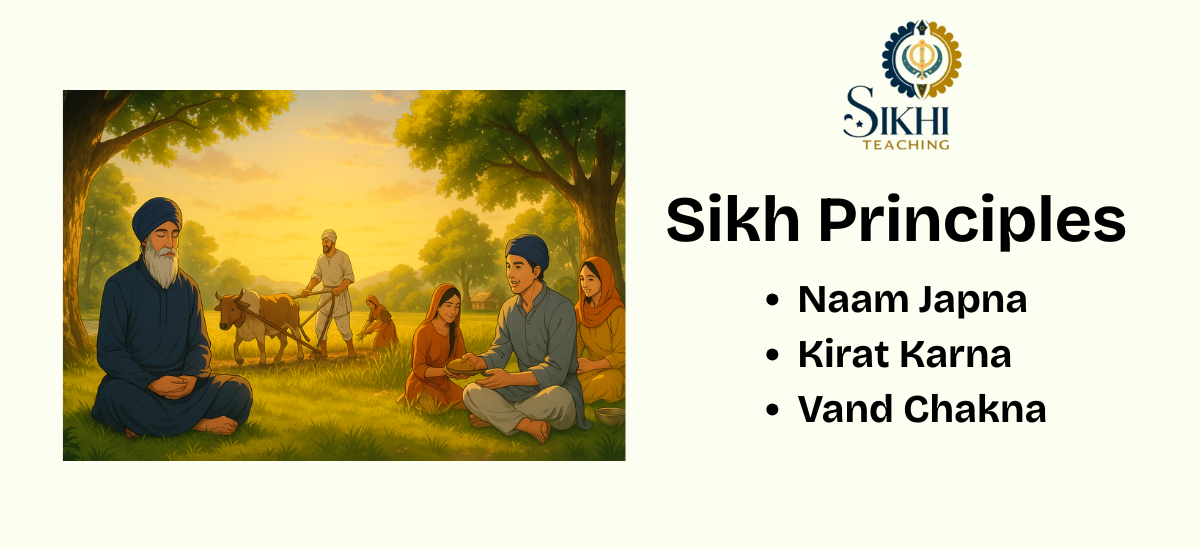
The Sikh faith, founded by Guru Nanak Dev Ji, is based on three main sikh principles: Naam Japna, Kirat Karni, and Vand Chakna.
Naam Japna means remembering and meditating on God’s name (Waheguru) to stay spiritually connected and live a truthful life.
Kirat Karni teaches earning an honest living through hard work and integrity, without cheating or exploiting others. It encourages Sikhs to live with dignity and responsibility.
Vand Chakna means sharing with others, especially those in need. Sikhs practice this through acts of charity and Langar (community kitchen), promoting equality and compassion.
Together, these principles guide Sikhs to live a balanced life devoted to God, honest in work, and generous in service to humanity.
What are the Sikh Principles? (Sikhi Principles Explained)
The Sikh Principles are the core values and teachings that form the foundation of Sikhism.
The goal of Sikhi is to connect with one God, live truthfully, and serve humanity selflessly.
Sikh Gurus taught that God is present in everyone, and all human beings are equal.
These Sikhi Principles are not only religious rules they are a way of life that brings peace, honesty, and compassion.
The Foundation: Oneness of God (Ik Onkar)

The first and most important Sikh Principle is the belief in One God (Ik Onkar).
It means that there is only one Creator who exists everywhere beyond form, caste, or religion.
When we learn to see God in every living being, hatred and division disappear from our hearts.
This idea forms the spiritual foundation of all Sikhi Principles.
Core Pillars: Naam Japna, Kirat Karni & Vand Chakna

The three main pillars of Sikh Principles define how Sikhs should live their daily lives:
Naam Japna (Meditation on God’s Name) : Remembering and chanting God’s name brings peace to the mind and keeps us close to truth.
Kirat Karni (Honest Living) : Earning a living through hard work and honesty, without cheating or greed.
Vand Chakna (Sharing with Others) : Sharing one’s earnings and resources with the needy and community.
Together, these three pillars make up the essence of Sikhi Principles guiding Sikhs to live with integrity, kindness, and humility.
The Principle of Seva (Selfless Service)
Seva, or selfless service, is one of the most important Sikh Principles.
It means helping others without expecting any reward or personal gain.
The Gurus taught that serving humanity is the same as serving God.
Examples of seva include preparing and serving in the langar (community kitchen), cleaning gurdwaras, or helping the poor and sick.
Through seva, a Sikh practices humility and compassion both central to Sikhi Principles.
Equality and Social Justice in Sikh Principles
Sikh Principles strongly emphasize equality among all human beings regardless of religion, gender, caste, or social status.
Guru Nanak Dev Ji declared, “No one is high, and no one is low.”
In gurdwaras, everyone sits together to share the same meal (langar), symbolizing unity and equality.
Equality and justice are the backbone of Sikhi Principles, promoting fairness, respect, and human dignity.
Hukam (Divine Order) & Living in God’s Will
Hukam means the Divine Will accepting everything that happens as per God’s order.
According to Sikh Principles, living in Hukam brings peace and contentment.
When we stop resisting life and trust God’s plan, our mind becomes calm and our heart open.
This principle teaches surrender, patience, and faith in divine wisdom.
Read Daily Hukamnama Sahib Darbar sahib
Maya, Ego & the Five Vices (Panj Vikar)

The Sikh Principles warn against five main vices (called Panj Vikar) that trap the human mind:
| Vice | Meaning |
|---|---|
| Kama | Lust or uncontrolled desire |
| Krodh | Anger |
| Lobh | Greed |
| Moh | Attachment |
| Ahankar | Ego or pride |
These vices create separation from God and inner peace.
Through Naam Japna (remembrance of God) and Sangat (holy company), Sikhs learn to overcome these weaknesses following true Sikhi Principles.
Journey of the Soul: Karma, Reincarnation & Mukti
The Sikh Principles teach that every action (karma) has a result.
Our good and bad deeds shape our future lives this is the law of karma.
The soul takes birth again and again until it becomes one with God, which is called Mukti (liberation).
By living truthfully, doing seva, and remembering God’s name, one can reach liberation and eternal peace.
Chardi Kala, Santokh & Other Virtues
Chardi Kala means always staying positive and optimistic, even in difficult times.
Santokh (contentment) teaches us to remain satisfied with what we have and avoid greed.
Other virtues like compassion, honesty, patience, and humility are also key parts of Sikh Principles.
Together, these qualities help a person live a happy, peaceful, and meaningful life.
Role of Sangat & Pangat in Sikh Life
“Pehle Pangat, Paache Sangat” was said by Guru Amar Das Ji, the third Guru of the Sikhs.
Sangat means being in the company of good and spiritual people. Attending gurdwaras, listening to kirtan, and reciting prayers help purify the mind and strengthen one’s connection with Waheguru.
Pangat refers to sitting together and eating in the langar, where everyone—rich or poor, high or low—shares the same food as equals.
Through these practices, Guru Amar Das Ji taught the values of unity, equality, and humility, which lie at the very heart of Sikhi principles.
Historical Development & Guru Teachings on Sikh Principles
Guru Nanak Dev Ji laid the foundation of Sikhism and its principles.
The following Gurus strengthened these Sikh Principles through their teachings and personal examples.
The Guru Granth Sahib Ji, the eternal Guru, contains the essence of all Sikh wisdom guiding humanity to live a life of truth, love, and devotion to one God.
Modern Application: Sikh Principles in Today’s World
Today, the Sikh Principles remain as relevant as ever.
In a world filled with stress, greed, and inequality, Sikhi Principles inspire people to live with kindness, honesty, and equality.
By practicing these principles truth, seva, and humility : anyone can lead a peaceful and meaningful life, regardless of religion or background.
Sikh Principles are easy to follow ?
Following Sikhi principles might sound easy, but practicing them in real life takes some effort. The main three principles Naam Japna, Kirat Karna, and Vand Chakna guide us to live a good life.
Naam Japna means remembering Waheguru through prayer or meditation, like saying Waheguru silently while studying or before starting your day. Kirat Karna is about earning honestly, which can be as simple as doing your homework sincerely or helping your parents without cheating or lying. Vand Chakna means sharing what you have with others, like giving your lunch to a friend who forgot theirs or donating to help someone in need.
Even in today’s busy life, following these principles is possible if we stay connected with Sangat (good and spiritual company) and try our best daily. These practices teach us honesty, kindness, and humility, and they make life peaceful and meaningful.
Summary: Key Takeaways on Sikh Principles
-
There is only one God who exists in everyone.
-
Remember God’s name, work honestly, and share with others.
-
Serve humanity selflessly (Seva).
-
Live in equality, humility, and contentment.
-
Accept God’s will (Hukam) and stay in Chardi Kala always positive.