

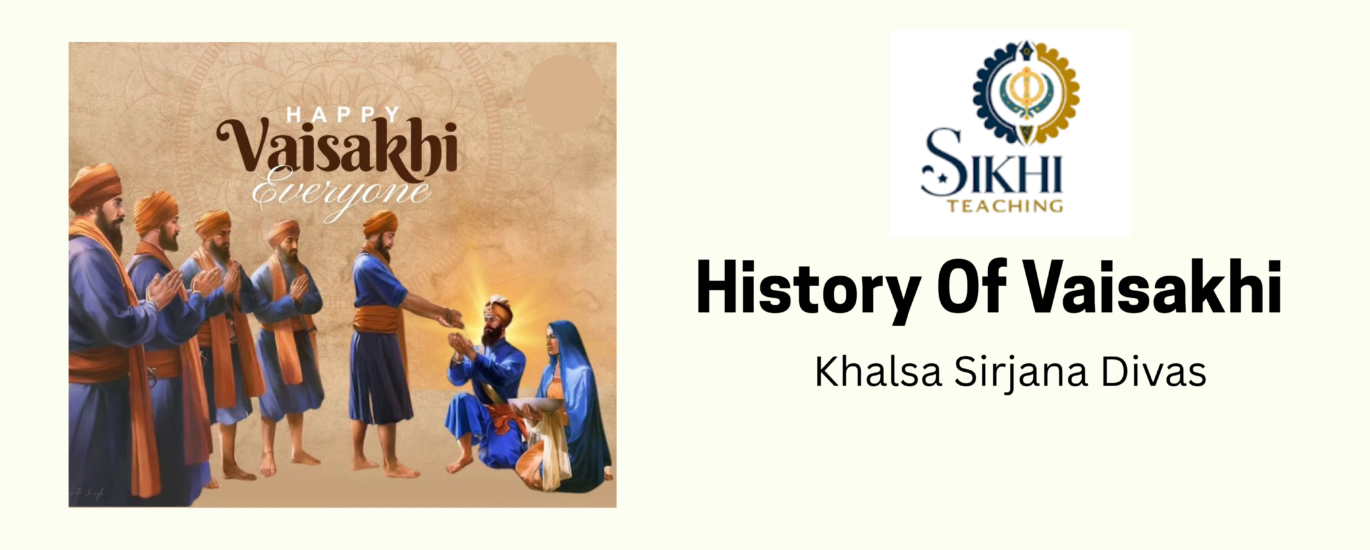
The year was 1699. Thousands of Sikhs had gathered at Anandpur Sahib in Punjab for the annual spring harvest festival. Then, their Guru did something no one expected.
Guru Gobind Singh stepped out of his tent holding a gleaming sword. He called for a Sikh willing to offer his head in devotion. The crowd fell silent. He asked once. He asked twice. He asked a third time and one man stepped forward.
What happened next would transform Sikhism forever. That single day, now celebrated as Vaisakhi (also spelled Baisakhi), gave birth to the Khalsa Panth the community of initiated Sikhs and remains the most significant festival in the Sikh calendar.
What Is Vaisakhi? (Overview)

Vaisakhi is a spring harvest festival and the most sacred day in the Sikh religious calendar. It commemorates the founding of the Khalsa Panth by Guru Gobind Singh on April 13, 1699. The festival is also observed as the Sikh New Year by many communities in the Punjab region of India and Pakistan.
The Historical Roots of Vaisakhi
Vaisakhi as an Ancient Harvest Festival
Long before the founding of Sikhism in the fifteenth century, the people of Punjab celebrated Vaisakhi as a harvest festival marking the ripening of the winter rabi crop primarily wheat and mustard. Farmers would give thanks for a successful harvest, and communities would gather for music, dance, and feasting.
The Martyrdom of Guru Tegh Bahadur and Its Impact
To understand why Vaisakhi 1699 was so transformative, one must understand the events that preceded it. Guru Tegh Bahadur, the ninth Sikh Guru and father of Guru Gobind Singh, was publicly executed in Delhi in 1675 on the orders of Mughal Emperor Aurangzeb. His crime: refusing to convert to Islam and championing the right of Hindus and all people to freely practice their faith.
His martyrdom shocked the Sikh community. It also deeply affected his young son, Gobind Rai, who would succeed him as the tenth Guru. The execution planted in him a conviction: that a community facing oppression needed not only spiritual strength but organised, visible, and courageous identity. Vaisakhi 1699 was his answer.
1699 - The Birth of the Khalsa Panth

Guru Gobind Singh’s Challenge at Anandpur Sahib
On the morning of April 13, 1699, Guru Gobind Singh summoned a vast assembly of Sikhs from across the subcontinent. Thousands had gathered for what they believed was a routine Vaisakhi celebration.
Standing before the crowd with a drawn sword, the Guru issued a stunning challenge: he asked for a Sikh who was willing to offer his head as a sacrifice for his faith. The sangat was stunned. After a long silence, a man named Daya Ram stepped forward. The Guru took him inside a tent. Moments later, the Guru emerged with a bloodied sword.
He then asked for another volunteer. Then another. Then another. Then a fifth. Each time, a man stepped forward, and the Guru returned from the tent with what appeared to be blood on his blade. The mood was one of shock and awe.
Then, the Guru brought all five men back out alive, dressed in magnificent new attire, turbans on their heads. The apparent bloodshed was part of a profound test of absolute faith and devotion. Those five men became the first members of the Khalsa, also known as Panj Pyare
Who Were the Panj Pyare : The Five Beloved Ones?
The five volunteers who stepped forward that day came from different castes, regions, and backgrounds a deliberate symbol of equality and universal brotherhood:
- Daya Ram (Bhai Daya Singh) : a Khatri from Lahore
- Dharam Das (Bhai Dharam Singh) : a Jatt farmer from Delhi
- Himmat Rai (Bhai Himmat Singh) : a water-carrier from Jagannath Puri
- Mohkam Chand (Bhai Mohkam Singh) : a calico-printer from Dwarka
- Sahib Chand (Bhai Sahib Singh) : a barber from Bidar, Karnataka
and after taking the amrit they become the 5 pyare for everyone
The Amrit Ceremony and the Five Ks (Panj Kakars)
Guru Gobind Singh prepared a sacred nectar called Amrit sweetened water stirred with a double-edged sword (khanda) while Gurbani (sacred hymns) were recited. He administered this Amrit to the 5 pyare , initiating them into the Khalsa in a ceremony called Amrit Sanskar or Khande Di Pahul.
He then asked the panj pyare to administer the same Amrit to him equalising himself with his disciples in an extraordinary act of humility. From that day forward, all Khalsa Sikhs would bear the surname “Singh” (lion) for men and “Kaur” (princess) for women, replacing the caste surnames that divided people.
All members of the Khalsa were also asked to wear or carry five articles of faith, known as the Panj Kakars (Five Ks):
- Unshorn hair : representing acceptance of God’s will Kesh
- A wooden comb : representing discipline and cleanliness Kangha
- A steel bracelet : representing the bond with God and community Kara
- Cotton undergarment : representing modesty and readiness Kachera
- A steel sword : representing courage and the duty to defend the defenceless Kirpan
The founding of the Khalsa on Vaisakhi 1699 is considered the most significant event in Sikh history after the revelation of the Guru Granth Sahib. It transformed Sikhism from a devotional movement into a community with a visible, unified identity — one that was deliberately designed to be recognisable and courageous in the face of oppression.
The Spiritual Significance of Vaisakhi for Sikhs
Vaisakhi as a Celebration of Courage and Equality
Guru Gobind Singh Ji choose the Panj Pyare from different castes and backgrounds to form the first Khalsa. At that time in 17th-century India, the caste system was very strong, so this decision was a bold step that showed all people are equal Guru Gobind Singh’s message was clear: in the eyes of the Waheguru (God), all human beings are equal. Vaisakhi, therefore, is not just a religious holiday it is an annual reaffirmation of Sikh values around human dignity and social justice.
Every year when Sikhs celebrate Vaisakhi, they remember these values and renew their commitment to them. The festival reminds the Sikh community about its history and the principles it stands for
Why Many Sikhs Choose to Take Amrit on Vaisakhi
Vaisakhi is traditionally the most auspicious day for Sikhs to undergo Amrit Sanskar the initiation ceremony that formally brings a person into the Khalsa Panth. On this day across Gurdwaras worldwide, groups of Sikhs gather to take Amrit from the Panj Pyare five initiated Sikhs who represent the original five beloved ones.
Taking Amrit on Vaisakhi is considered deeply meaningful because it connects the individual’s spiritual journey directly to the founding moment of the Khalsa in 1699. It is a declaration of faith, identity, and belonging to a worldwide community united by common values.
How Is Vaisakhi Celebrated?
Prayers and Gurdwara Rituals
Vaisakhi celebrations typically begin before dawn. Sikhs gather at the Gurdwara (house of worship) for Amrit Vela the spiritual hour before sunrise. The Guru Granth Sahib (the Sikh holy scripture, regarded as the eternal living Guru) is ceremonially opened, and special Vaisakhi-themed prayers and Kirtan (devotional singing of Gurbani) continue throughout the day.
The day’s programme usually includes an Ardas (a formal Sikh prayer), the reading of the Hukamnama (a random daily reading from the Guru Granth Sahib), and the distribution of Karah Parshad a warm, sweet semolina pudding that symbolises the equality of all who receive it, regardless of background.
Nagar Kirtan : The Procession Through the Streets
One of the most visually striking features of Vaisakhi is the
Nagar Kirtan (literally “city singing”) a procession in which the Sikh community walks through the streets singing devotional hymns and prayers. The procession is typically led by the Panj Pyare five initiated Sikhs dressed in traditional Khalsa attire, representing the original five beloved ones.
During the procession, the Guru Granth Sahib is respectfully carried on a beautifully decorated platform at the front. Gatka performers, who practice Sikh martial arts, often lead the procession, followed by thousands of devotees. The streets are decorated with saffron and blue flags, the colours of the Khalsa. The atmosphere becomes joyful with the sound of traditional Sikh instruments like the dhol, nagara, and rabab.
Langar The Community Kitchen
On Vaisakhi, the tradition of Langar the free community kitchen that is a cornerstone of every Gurdwara is observed on a grand scale. Thousands of volunteers prepare and serve free meals to everyone who comes, without distinction of caste, religion, gender, or background.
The Langar on Vaisakhi typically includes traditional Punjabi dishes: dal makhani, chana masala, saag, rice, fresh chapatis, and the beloved Karah Parshad. Eating together, shoulder to shoulder, is itself a powerful expression of the Sikh ideal of equality.
Gatka The Sikh Martial Art Display
Gatka is a traditional Sikh martial art that uses weapons including swords, shields, and staves. At Vaisakhi, Gatka performances are a highlight of Nagar Kirtan processions and Gurdwara programmes, serving as a reminder of the Khalsa’s warrior heritage and the principle that a Sikh must be capable of defending the vulnerable.
Gatka displays range from choreographed pair sparring to impressive solo demonstrations of skill, agility, and weapon handling. They are a favourite with younger attendees and are increasingly being revived by Sikh youth worldwide.
Bhangra, Gidda, and Cultural Festivities
Away from the Gurdwara, Vaisakhi is also celebrated with exuberant cultural performances. Bhangra the energetic Punjabi folk dance traditionally performed by men to celebrate the harvest and Gidda the corresponding women’s dance are central to Vaisakhi festivities in Punjab and in Punjabi diaspora communities worldwide.
Fairs (melas) are held across Punjab with folk music, wrestling competitions, and traditional games. Families dress in vibrant new clothes mustard yellow, deep orange, and royal blue are particularly popular during Vaisakhi. The overall mood is one of joy, gratitude, and community pride.
Vaisakhi and Other April Harvest Festivals
Vaisakhi is one of several spring harvest festivals celebrated in South Asia and around the world during April. Understanding these festivals side by side helps contextualise the agricultural and spiritual richness of this time of year.
Festival | Community & Key Meaning |
Vaisakhi / Baisakhi (April 13–14) | Sikhs & Punjabis — Khalsa Sirjana Divas + spring harvest |
Pohela Boishakh (April 14) | Bengalis — Bengali New Year; cultural renewal |
Vishu (April 14) | Keralites — Malayalam New Year; prosperity rituals |
Bihu (April 13–15) | Assamese — Rongali Bihu; spring, new year, harvest |
Ugadi (varies, March–April) | Telugu & Kannada communities — New Year festival |
Frequently Asked Questions About Vaisakhi Festival
What is Vaisakhi and why is it celebrated?
When is Vaisakhi Festival in 2026?
Is Vaisakhi the same as Baisakhi?
Who created the Khalsa on Vaisakhi?
Who is Mother of Khalsa Panth ?
Conclusion
Vaisakhi is, at its heart, a celebration of two profound gifts: the gift of the harvest that sustains life, and the gift of an identity forged in courage, equality, and devotion. When Guru Gobind Singh stood before that vast assembly in 1699 and called for volunteers willing to give everything, he was asking not just for sacrifice he was inviting an entire community into a new way of being in the world.
Vaisakhi is not just a festival. It is a living memory and a living promise.
